
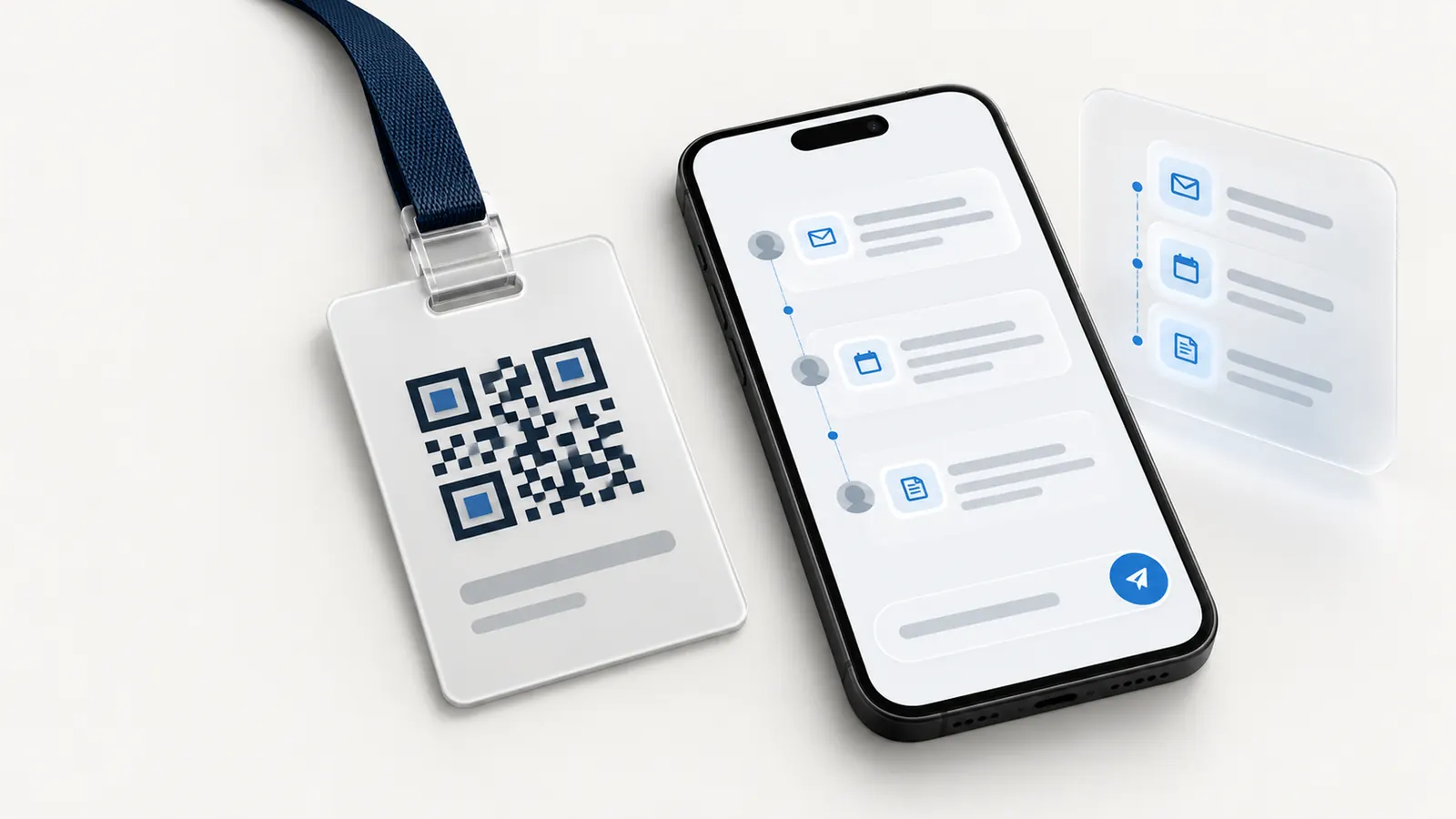
Imagine your stand attracts plenty of visitors at a home show. People ask questions and describe their projects. By the end of the day, everyone leaves and the details of those conversations begin to get lost.
The next morning, you have registrations and a vague plan to follow up. Everyone gets the same offer email. The questions, requests and promises made during the event are still in scattered notes.
That is a missed opportunity. The value of an event isn't only what happens on the day. It's also what you learn about the people who showed up and how fast you help them afterward.
Decide what should happen before the event begins
Is it a new-development viewing, a home show, an open house or a presentation for property owners? Do you want to arrange a visit, review a project, answer a question or maintain useful contact?
Choose a suitable next step: a brochure, plan, answer, availability or project discussion. Not every attendee needs a sales appointment.
You don't need a hard pitch after every event. People can feel the difference between being helped and being chased.
Capture more than names
A registration tells you who planned to come, without explaining their project. Keep the questions, requests and commitments made during the event.
At a development presentation, someone may ask for a specific floor plan. At a home show, an owner may describe their roof. At an open house, a visitor may request a second viewing. Record what they actually asked for.
Be sensible about privacy. A chat on a stand isn't automatically marketing material. Tell people how you'll follow up and ask for permission where needed. Don't turn something a visitor shared about their money or their family into an automated sales pitch.
AI can help turn quick voice notes into clean records or group questions by theme. Have a person review any note that ties a detail to a specific visitor. Getting that detail wrong can hurt the very relationship you're trying to build.
Follow up like you were there
A useful message picks up the actual conversation. If you promised a plan, send it. If someone asked about villa availability, answer and provide a suitable next step. Skip the call when a reply is enough.
Distinguish people who registered but did not attend, visitors who described a project and existing clients. The first group may need the presentation materials or another date. The second needs an answer to their enquiry. Existing clients need the documents or next action agreed.
That segmentation doesn't require tracking every click. It requires paying attention to what visitors told you directly.
Imagine a company presenting its renovation work at a home show. A visitor asks whether it covers their town. Answer with the actual service area. If the question keeps coming up, improve the display materials instead of asking everyone to book a call.
Give the relationship somewhere to go
Follow up while the conversation is still fresh. Send the document or answer you promised and confirm the next step agreed with the person.
You can send a brochure, offer a viewing or explain stay terms. If someone requests a project review, make the conversation easy. Give people who are still exploring useful information and room to decide.
For a sale or substantial building project, a personal reply from the person they met may help. Automation prepares context, assigns the follow-up and records the agreement. The person remains responsible for the message.
Learn from what happened
Track attendance, documents promised and sent, replies received and enquiries for viewings, quotes or stays. Compare those results with the event’s cost and the time spent on it.
A repeated question may call for a clearer brochure or page. No-shows may suggest reminders or timing need review. Interested visitors who cannot find the next step need a clearer path.
Measure over a period that fits the project. A homeowner contacting you a month after a show may have discovered you there. A visitor may also use the information without buying immediately.
Use the event to improve the offer
Questions at the event also show what remains unclear about your offer. Explain your service area, the work you cover or the stays available. Pass questions about how the service runs to the team carrying it out.
Bring the questions back to the founder or team responsible for the offer and delivery. A useful workflow can summarize the themes, assign promised resources and record improvements for the next event. Those changes give you a real reason to reconnect: "You asked about this, and here is what we improved."
Your team should also know who owns each follow-up before the event starts. If a visitor asks for a callback, name the person who will make it. If you promise a price or a plan, decide where it lives. People notice when a good conversation ends with a promise that never arrives.
Run a small test at your next event
At the next show, viewing or event, choose two pieces of context to capture. Send each group the resource or answer it needs, then assign every specific promise to an owner.
A week later, compare what visitors asked for with what they actually received. That simple check will show you where automation can help.