
Imagine a guest confirms a stay on Saturday. The receipt arrives, but the arrival instructions do not. They message you on Instagram, then email your team. They have booked, but still do not know how to access the property.
Inside the business, everyone thinks the platform or someone else sent the welcome. From the client's side, the first experience of your offer is having to chase what they bought.
Those first days set the tone for delivery. Did my payment go through? Where do I start? Who can help me? What do you need from me? Good onboarding answers those questions before the client has to ask twice.
The same problem appears when a homeowner signs an agency agreement or accepts a building quote. The first step changes. The need for clarity stays the same.
Map what happens after the purchase
Start when payment, or the contract required for your service, authorizes delivery. Write down the real sequence from that moment to the client's first useful action.
Does the client receive the right documents? Is a visit needed, or can they prepare the next step directly? Who checks missing information? What happens if confirmation is delayed or the same record arrives twice?
A guest may receive the wrong access code. A building client may send plans that never reach the project owner. A seller may sign an agreement without knowing when photos will be taken. These are gaps in the same handoff.
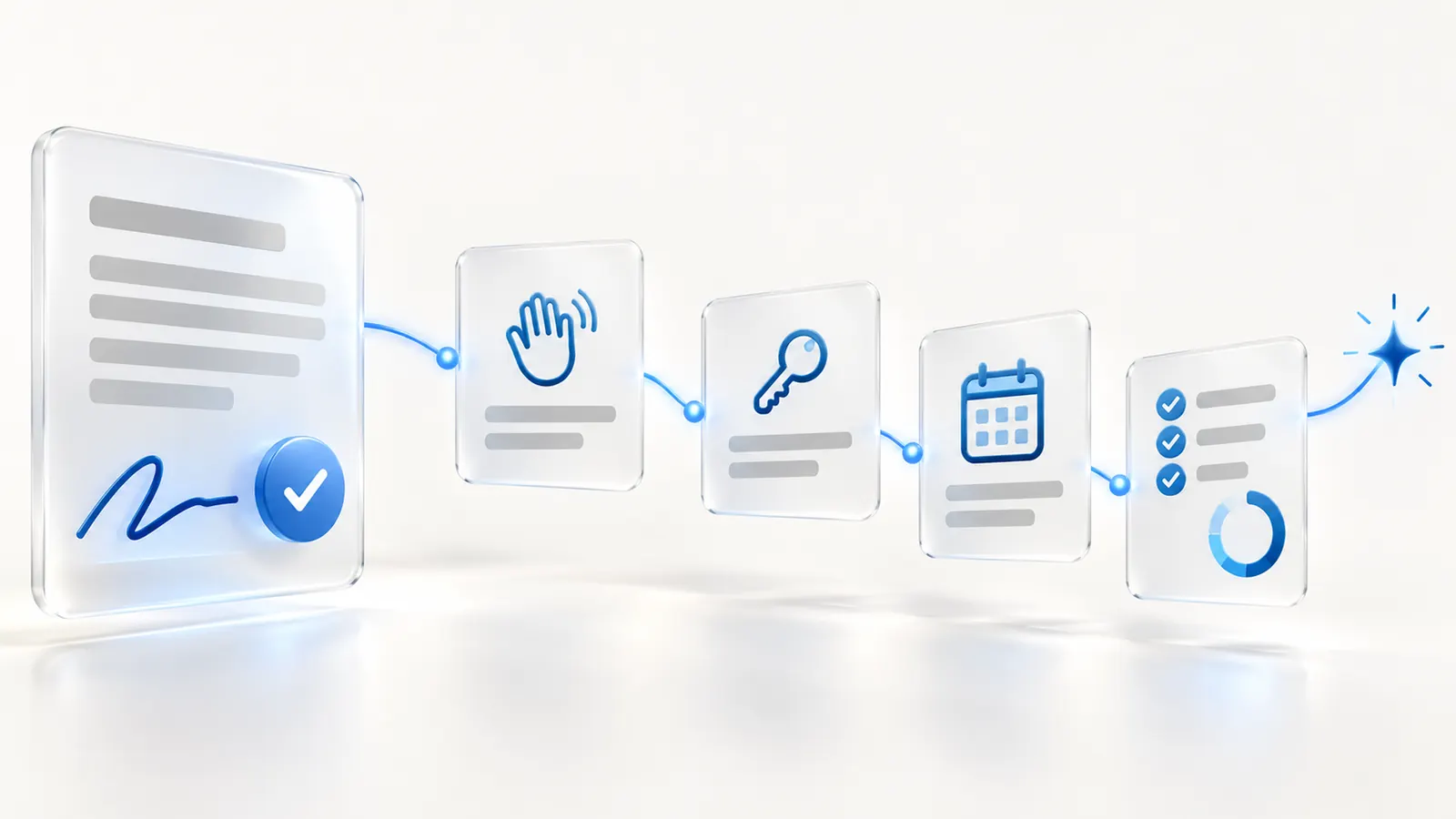
Once you define the path, a system can confirm the purchase, send the right access, create the tasks and give the owner the context. A failed step should stay visible until someone resolves it.
Keep the agreed details in one shared record
A client shouldn't have to repeat what they already told you before buying. Keep the offer purchased, the agreed scope, their goal, relevant dates and the promises your team made.
That record has to serve the person doing the work. A long sales transcript isn't an onboarding brief. A short, checked summary of the commitments is.
AI can draft the summary from the form, messages and any sales call. A person checks scope, price, dates and personal details. Then the workflow creates the checklist for the offer actually purchased.
A seller needs to know which documents to send. A building client needs the approval and preparation steps. A guest needs arrival times, access instructions and a reachable contact.
Show the client what's happening
People feel neglected when they can't see progress. You don't need to flood them with notifications. Give them a clear next step, a named contact and a timeline.
A useful message might say: ‘Your stay is confirmed. Here are the address and arrival times. Access instructions will be sent at the stated time. Claire handles your arrival; reply to this email if anything is unclear.’ Verify each detail before sending.
That message is reassuring because it is specific. If the team cannot meet the stated timing, let the client know before the deadline passes.
For a substantial renovation, a personal conversation with the project owner can help. For a stay, reliable instructions and a clear first action may matter more. Adapt the attention to the service.
Remove friction before it becomes a support queue
Which steps cause repeated questions? Do clients get lost between forms? Are they asked for the same information twice? Do guests have to search through messages to find arrival instructions?
Fix the path itself. Use one form where it makes sense. Save answers where the delivery owner can see them. Remind people only about missing items. Offer an easy way to reach someone, and escalate repeated access failures.
Once a client signs or books, pass the agreed details to the team taking over. The client should know who to contact and what happens next.
Measure the path to the first useful action
Track time from confirmation to useful instructions, missing information and repeated questions. Check the first expected action: sending plans, preparing a visit or confirming arrival. Ask clients whether they knew what to do next.
Don't confuse checklist completion with experience. Everything can be marked done while the client still feels lost. Read the welcome messages and test the access yourself.
Clients don't need constant notifications. They need access to what they bought, a clear start and a reliable answer when something goes wrong.
A small onboarding flow in practice
Imagine a villa manager. A confirmed booking creates the stay record. The welcome message explains timings, upcoming instructions and the responsible contact. The team checks that the guest has what they need before arriving.
If sending the access instructions fails, the system alerts the person responsible and leaves the task open. If the guest already has a record, the booking is linked to it. A person checks ambiguous cases before changing access.
The value comes from reliable handoffs. If the offer changes, a person updates the rules and the welcome before the next purchase goes through.
Begin with the first 48 hours
Review one offer first. Follow a purchase through the first two days. You can improve the rest of the client journey once the start is reliable.
Write the welcome. Name the owner. Define what should unlock, what information is needed and what the client should do first. Test a normal purchase, a duplicate and a failed access step.
Then automate the handoffs that repeat. Keep the client's first step visible, so more purchases don't simply become more manual chasing.